About me
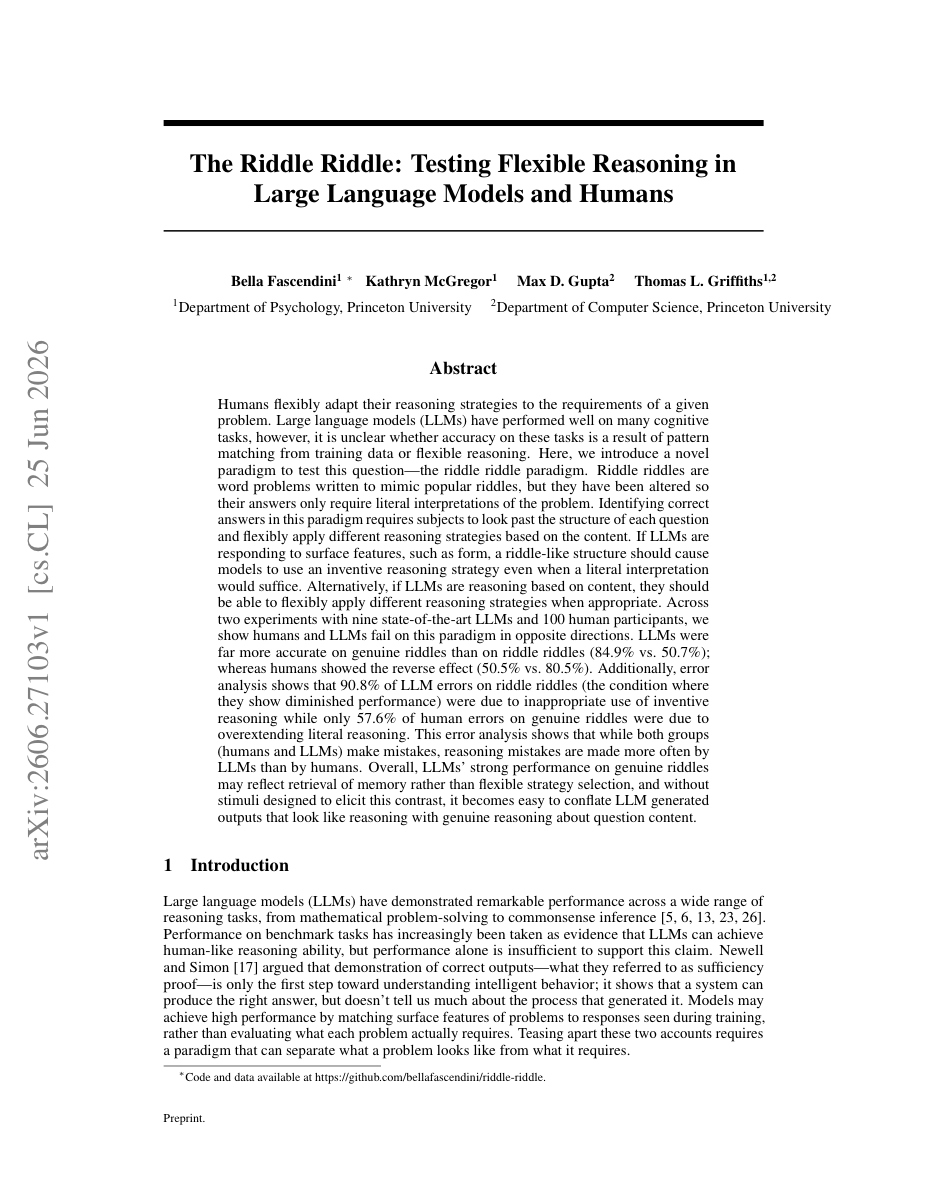
Hello! My name is Bella Fascendini. I'm a PhD student in the Psychology Department at Princeton University, with a minor in Statistics & Machine Learning, working with Profs. Tania Lombrozo and Tom Griffiths.
I'm interested in studying what makes human intelligence powerful and where it meets its limits. Much of my current work examines how people form mental models of AI competence and when those models lead us astray. Specially, I'm investigating when and why people defer to AI judgment, how linguistic fluency creates illusions of AI competence, and how mechanistic explanations of LLM impact people's trust and deference to AI. Part of this work also involves investigating where LLM reasoning diverges from human reasoning, and what that gap tells us about the nature of intelligence itself.
Previously, I've done developmental work examining young children's intrinsic motivation to explore their own competence, using Bayesian models to formally tease apart what motivates exploration. This work also shaped how I think about studying intelligence more broadly. One unique challenge of developmental research is that we are trying to study cognition in agents who can't report what they know — a similar challenge to what AI researchers face today. My training in developmental research provided me tools for exactly this challenge: designing novel paradigms that dissociate competence from performance, rule out alternative explanations, and probe underlying mechanisms rather than taking behavior or performance at face value.
Before joining Princeton, I worked with Prof. Kalanit Grill-Spector at Stanford University, where I studied how infants' brains develop in the first year of life. I also worked with Prof. Henrike Moll at USC, where I studied children's theory of mind development and causal reasoning. I received my BA in Psychology from Boston University.
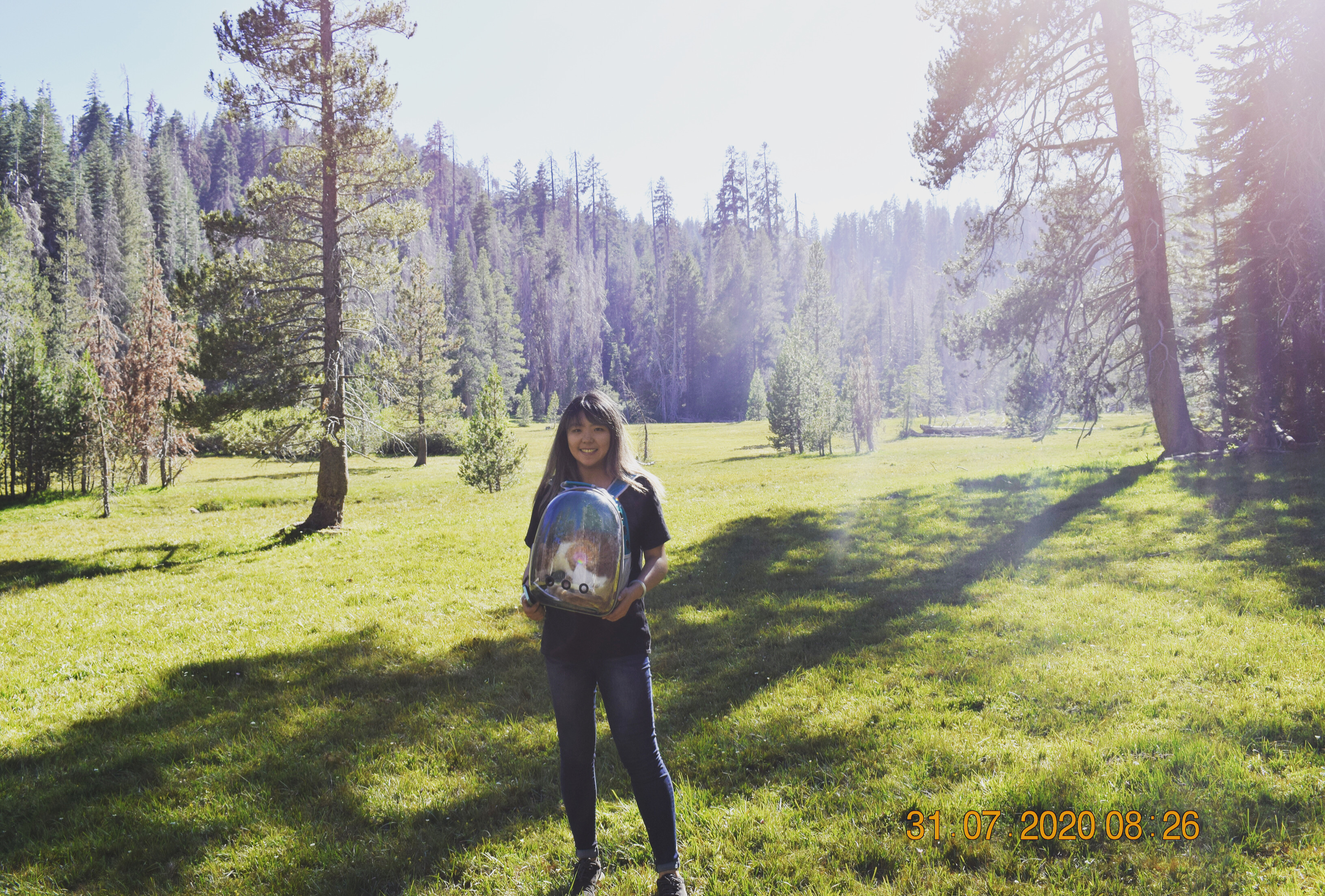
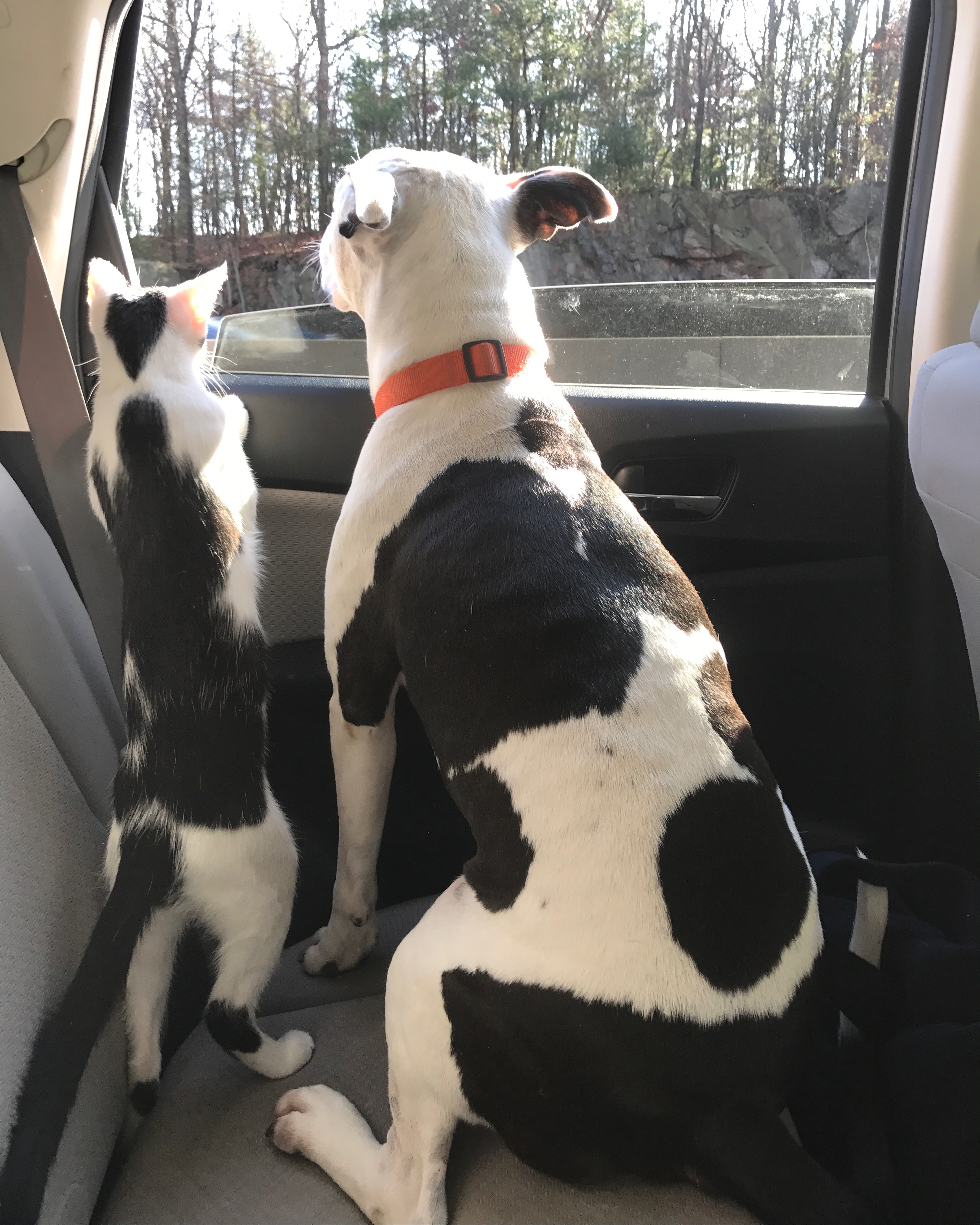
Outside of research, I enjoy spending time in nature (I LOVE camping!), reading, practicing yoga, doing soothing art projects and hanging out with my furrends (check out their photos in "For Fun"!). From 2021 to 2023, I also served as a co-host for the Stanford Psychology Podcast – it was one of the coolest experiences I've ever had! If you are interested, check it out here!